
– Written by Vadim Larramendi
Stability, Articulation, and Precision in Relevé and Jumps
How the Ankle Supports Balance, Elevation, and Technical Safety
Introduction: The Ankle as the Dancer’s Foundation
The ankle is the dancer’s primary point of contact with the floor. Every relevé, plié, jump, landing, and weight transfer depends on its stability and mobility. When the ankle functions correctly, dancers feel light, balanced, and secure. When it fails, the entire technique collapses.
Biomechanically, the ankle is the base of the dancer’s axis.
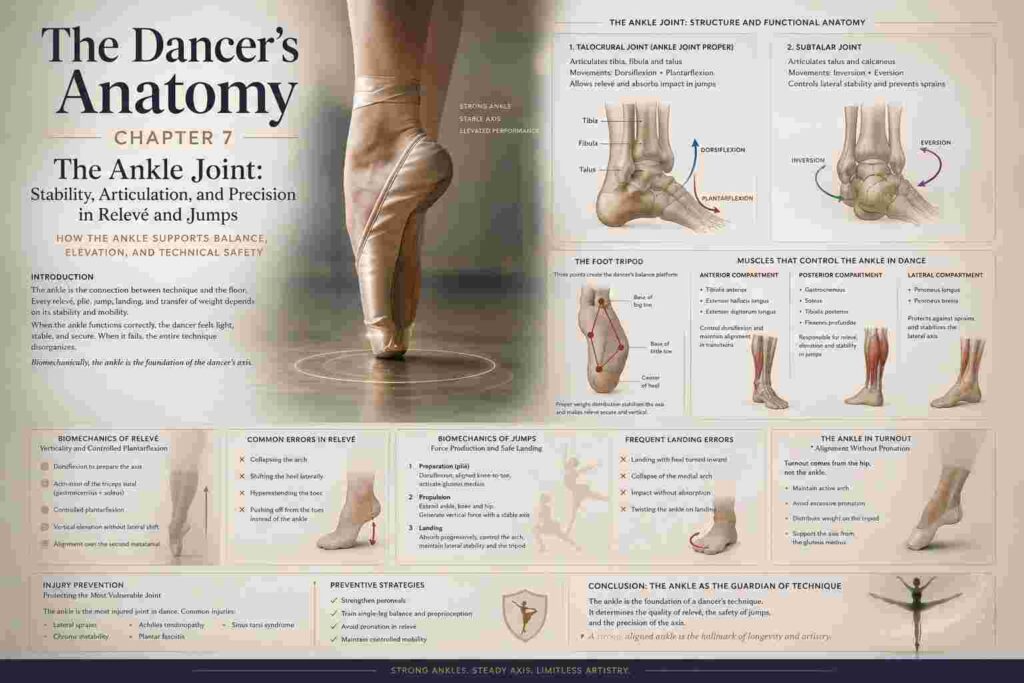
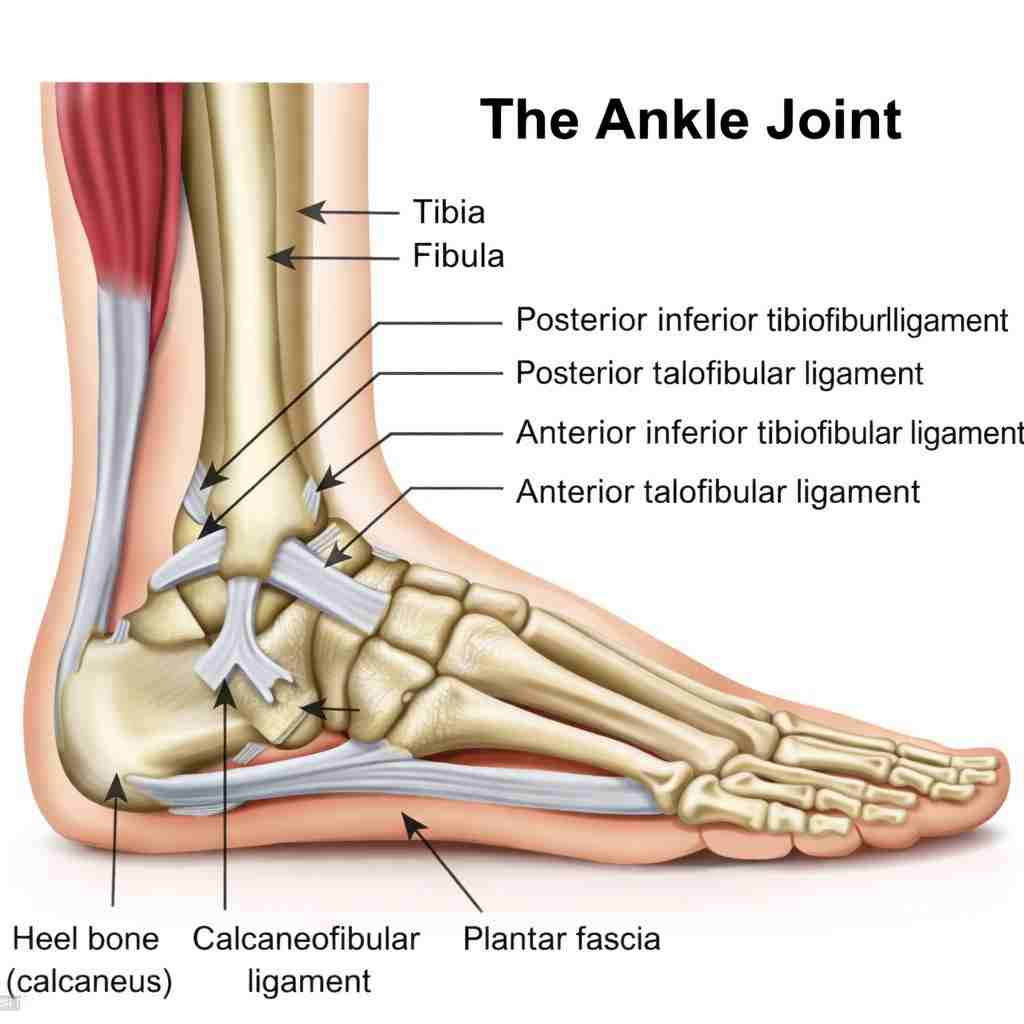
The Ankle Joint: Structure and Functional Anatomy
The ankle is composed of two essential articulations:
1. Talocrural Joint (Ankle Joint Proper)
Formed by:
- tibia
- fibula
- talus
Movements:
- dorsiflexion
- plantarflexion
This joint allows dancers to rise into relevé and absorb impact during landings.
2. Subtalar Joint
Formed by:
- talus
- calcaneus
Movements:
- inversion
- eversion
This joint controls lateral stability and protects against sprains.
The Foot Tripod: The Dancer’s Balance Platform
The foot operates as a natural tripod composed of three contact points:
- base of the big toe
- base of the little toe
- center of the heel
When dancers distribute weight evenly across this tripod, the axis stabilizes and the relevé becomes vertical and secure.
Muscles That Control the Ankle in Dance
Anterior Compartment
- tibialis anterior
- extensor hallucis longus
- extensor digitorum longus
Responsible for dorsiflexion and controlled transitions.
Posterior Compartment
- gastrocnemius
- soleus
- tibialis posterior
- deep flexors
These muscles generate relevé, elevation, and stability in jumps.
Lateral Compartment
- peroneus longus
- peroneus brevis
They protect against sprains and stabilize the lateral axis.
Biomechanics of Relevé: Verticality and Controlled Plantarflexion
Relevé is a precise biomechanical sequence:
- Initial dorsiflexion to prepare the axis
- Activation of the triceps surae (gastrocnemius + soleus)
- Controlled plantarflexion
- Vertical lift without lateral deviation
- Ankle aligned over the second metatarsal
Common Errors
- collapsing the arch
- heel drifting outward or inward
- gripping or hyperextending the toes
- pushing the relevé from the toes instead of the ankle
Biomechanics of Jumps: Force Production and Safe Landing
Jumps rely on three biomechanical phases:
1. Preparation (plié)
- controlled dorsiflexion
- knee‑to‑toe alignment
- gluteus medius activation
2. Propulsion
- extension of ankle, knee, and hip
- vertical force production
- stable axis
3. Landing
- progressive shock absorption
- controlled arch support
- lateral stability
- tripod alignment
Frequent Mistakes
- landing with the heel inverted
- collapsing the medial arch
- absorbing impact poorly
- twisting the ankle on descent
The Ankle in Turnout: Alignment Without Pronation
Healthy turnout originates in the hip, but the ankle must support it without collapsing.
Key Principles
- maintain an active arch
- avoid excessive pronation
- distribute weight through the tripod
- stabilize the axis with the gluteus medius
Injury Prevention: Protecting the Most Vulnerable Joint
The ankle is the most frequently injured joint in dance. Common injuries include:
- lateral ankle sprains
- Achilles tendinopathy
- sinus tarsi syndrome
- chronic instability
- plantar fasciitis
Preventive Strategies
- strengthen the peroneals
- train single‑leg balance
- improve proprioception
- avoid pronation in relevé
- maintain controlled mobility
Conclusion: The Ankle as the Guardian of Technique
The ankle is the foundation of dance technique. Its stability determines the quality of the relevé, the safety of jumps, and the precision of the dancer’s axis. A strong, aligned ankle is synonymous with technical longevity.